The Man Who Fell Out of the Sky at Shinar
He arrived in the barley, which was the first mistake, because the barley belonged to Enmerkar's widow and she had a sickle.
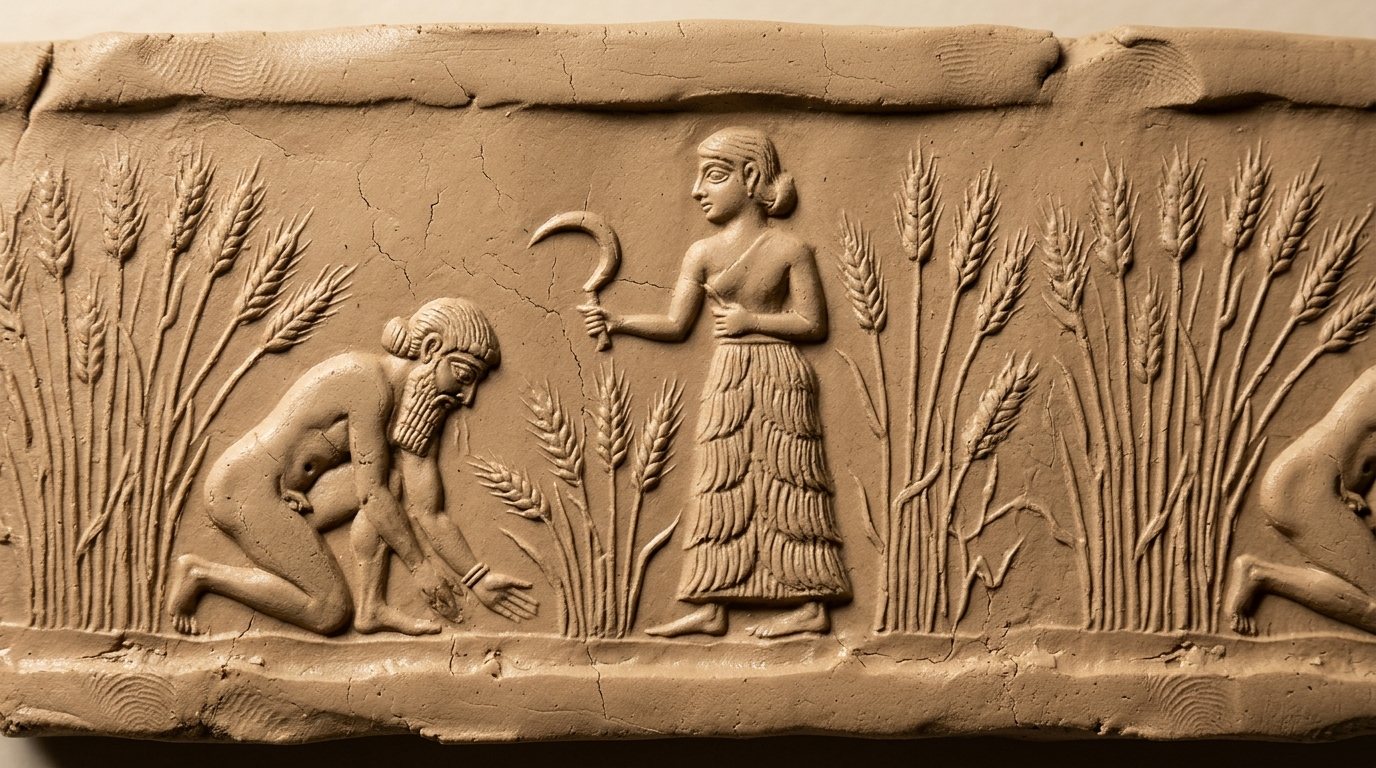
He was naked except for a band of grey metal around his wrist, and he was weeping. The widow had seen men weep before, but not like this. He kept touching the ground and looking at his hand as if the dirt had told him something terrible. Then he looked up at the sky and screamed at it, the same sounds over and over. Later, when he had words she knew, she learned what they had been: Too far. Too far. Too far.
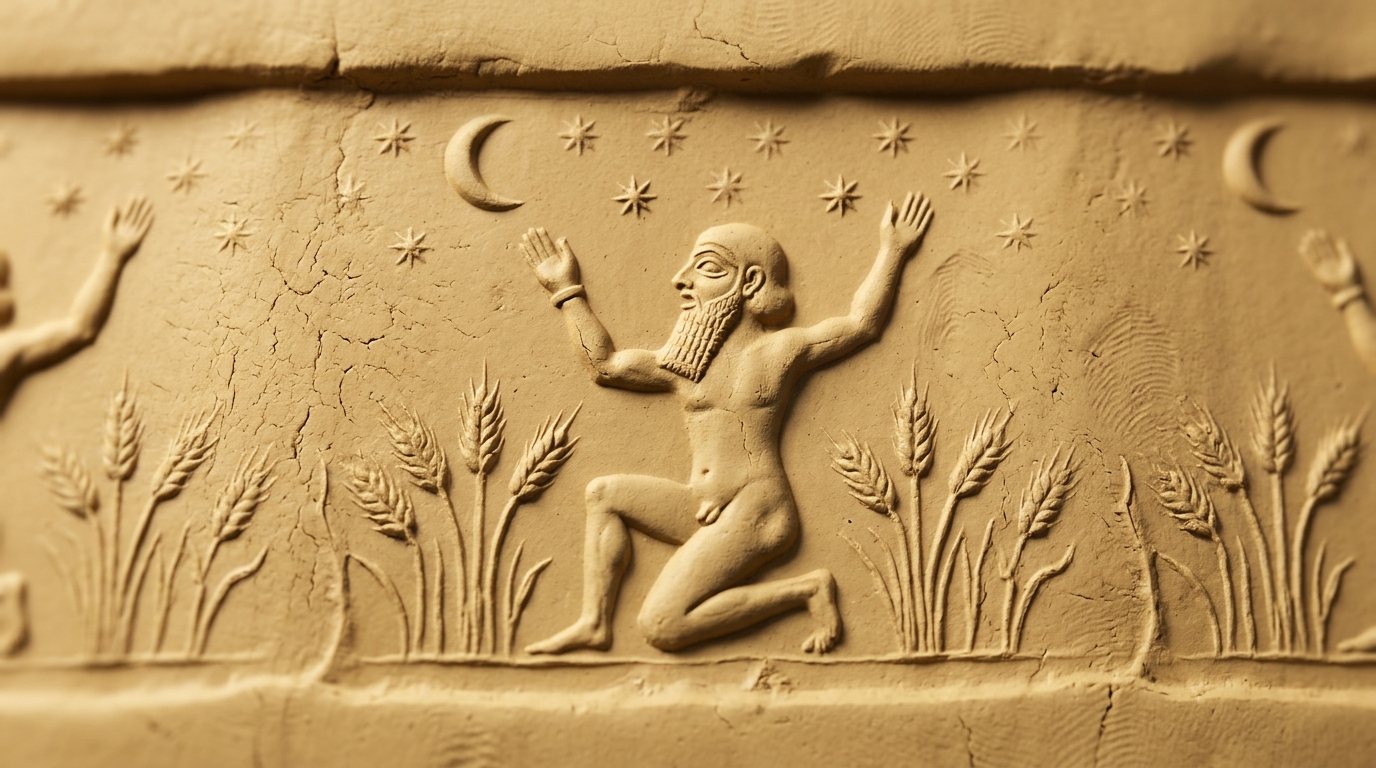
She did not use the sickle. She gave him her dead husband's tunic and took him to the river, where the men were cutting reeds.
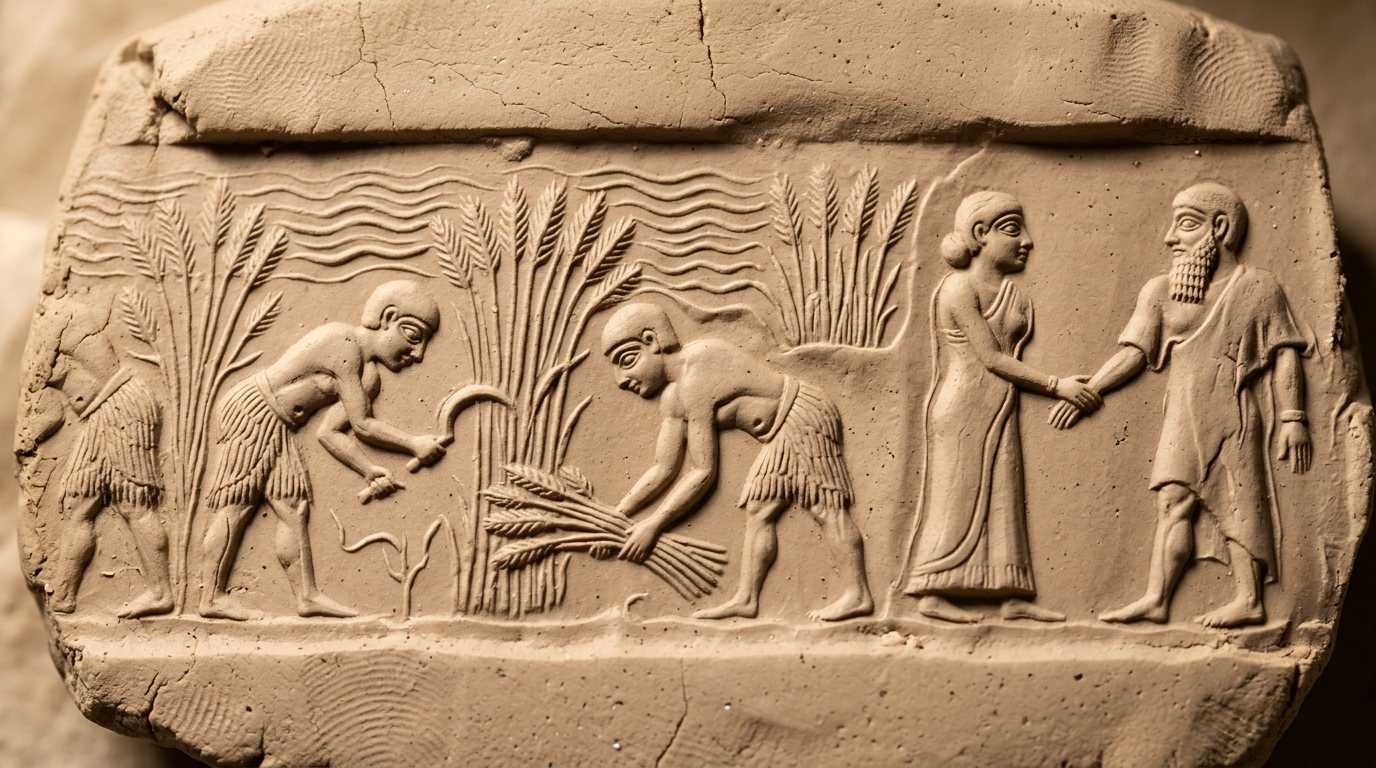
They called him the Fallen, because that was what he had done. He did not object. He did not seem to understand objection.
He learned their words faster than a child but slower than he wanted to. Ilum-pada, who kept the grain tallies and so was considered clever, was set to teach him, and he would later say it was like teaching a man who already knew everything and could find none of it. The Fallen would point at a thing, a pot, a goat, a star, and say three or four of his own words for it, impatient, as if their single word were not enough. He wanted words for things they did not have. He kept asking Ilum-pada for the word for a voice that is not a person. Ilum-pada told him: a ghost. The Fallen shook his head. He tried a person that is not born. Ilum-pada said: a god. And the Fallen went quiet for a long time, then said, in his own tongue, something soft and bitter, and nodded.
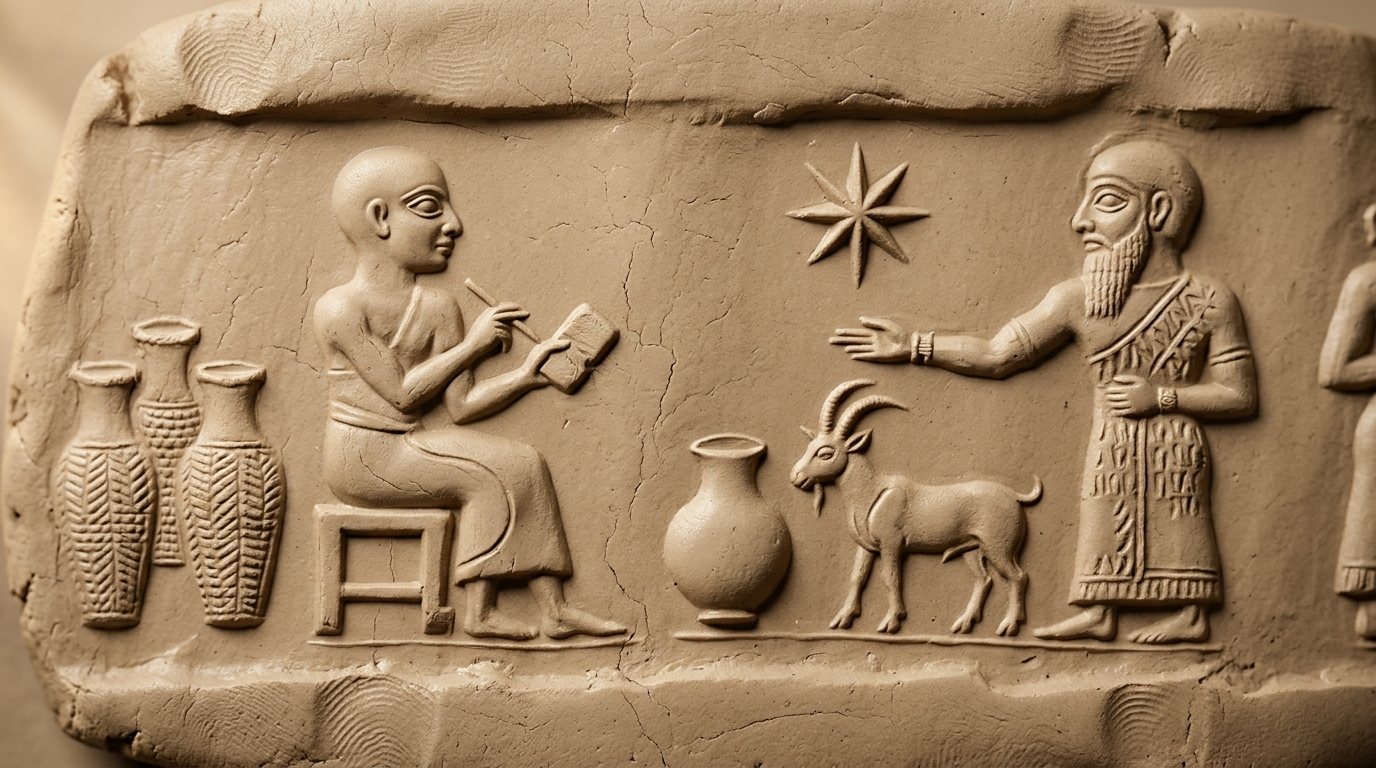
"Yes," he said in theirs. "A god. Close enough."
He had come to tell them something. That much was clear from the first month. He would gather people in the evenings by the kilns, where it was warm, and he would talk with his hands as much as his mouth, and the people would listen because he was strange and because the fire was warm and because there was nothing else after dark.
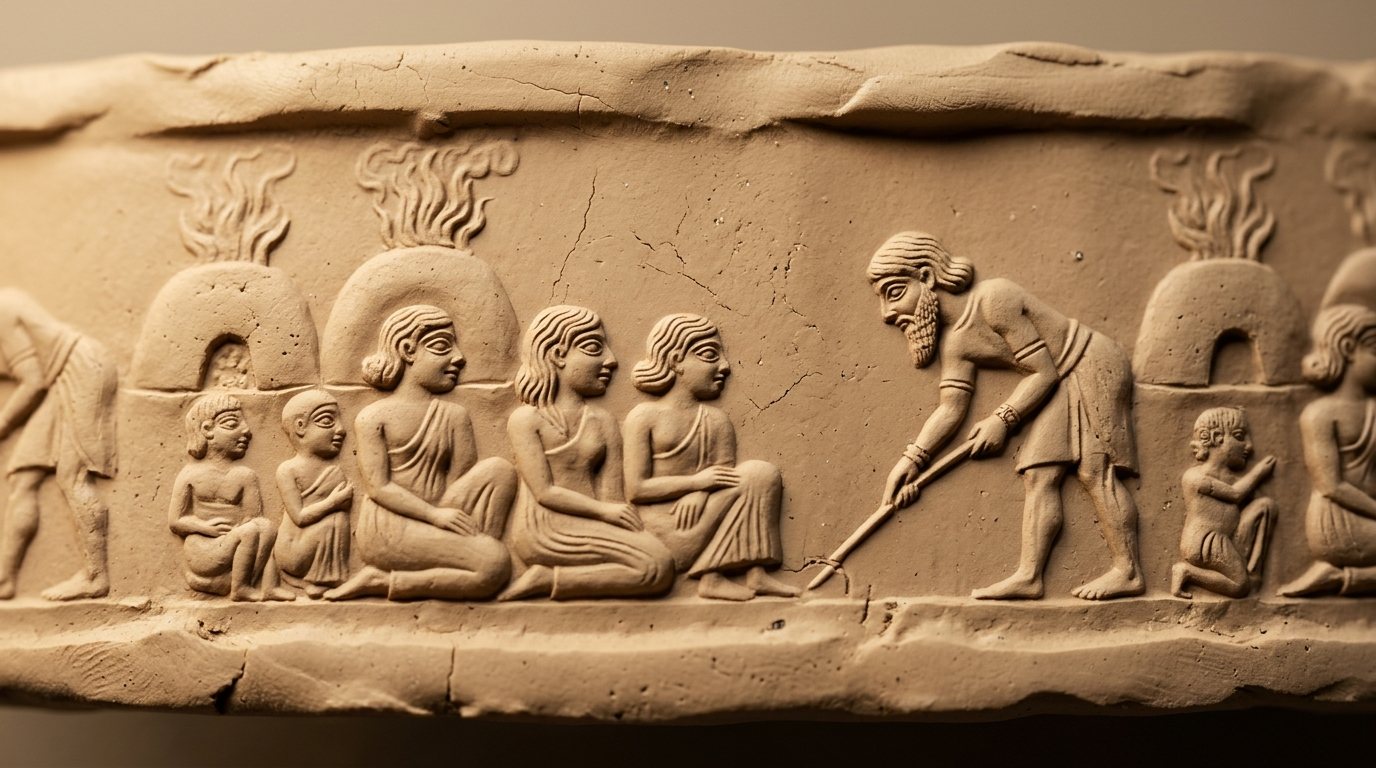
He would draw in the dirt with a stick. He drew a small square. Then, on top of it, a second square, and he tapped the first one hard and said, "This one makes this one." Then a third on the second. "And this makes this. Better. Again." Then he drew a line curling from the top back down to the bottom, round and round, until the stick tore the dirt, and said a word in his own tongue that folded back on itself.
The people looked at the squares stacked one on another, each a little different from the last, and saw what anyone in Shinar would have seen. There was one standing at the edge of the city, half-built, terrace on terrace, with the priests' house meant to sit at the top.
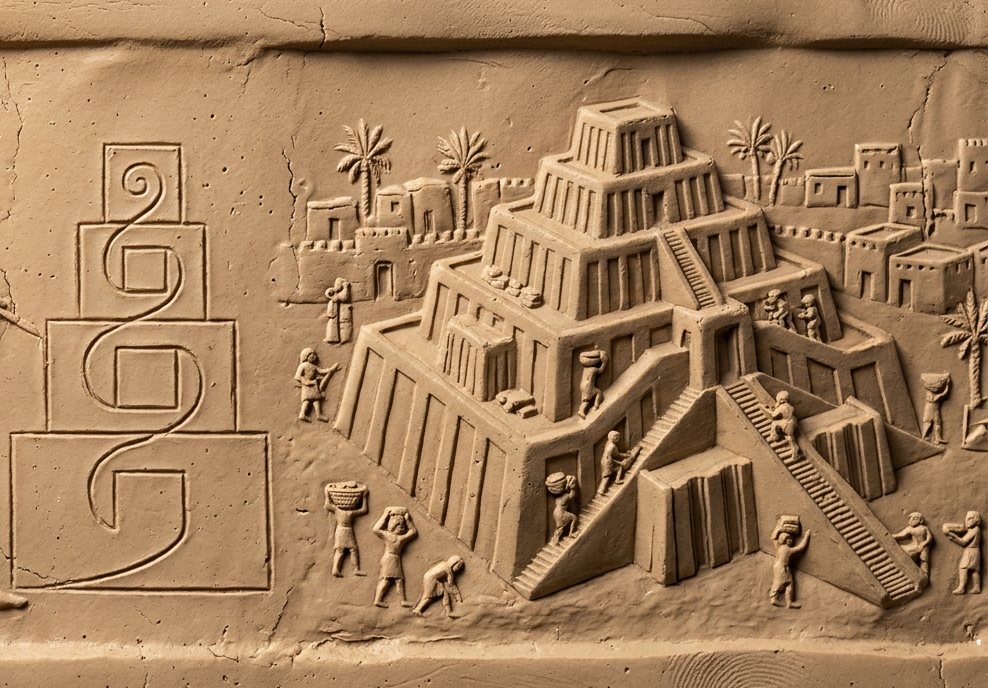
"A tower," said the potter's son.
The Fallen looked at the drawing for a long time. "It builds itself," he said. "On top of itself. Over and over. Nobody builds it after the first. You understand? It is its own builder."
They did not understand. A tower that builds itself was a riddle, and a riddle has an answer, and the answer was obviously the men who carried the bricks.
"Yes," the Fallen said at last. "A tower. Close enough."
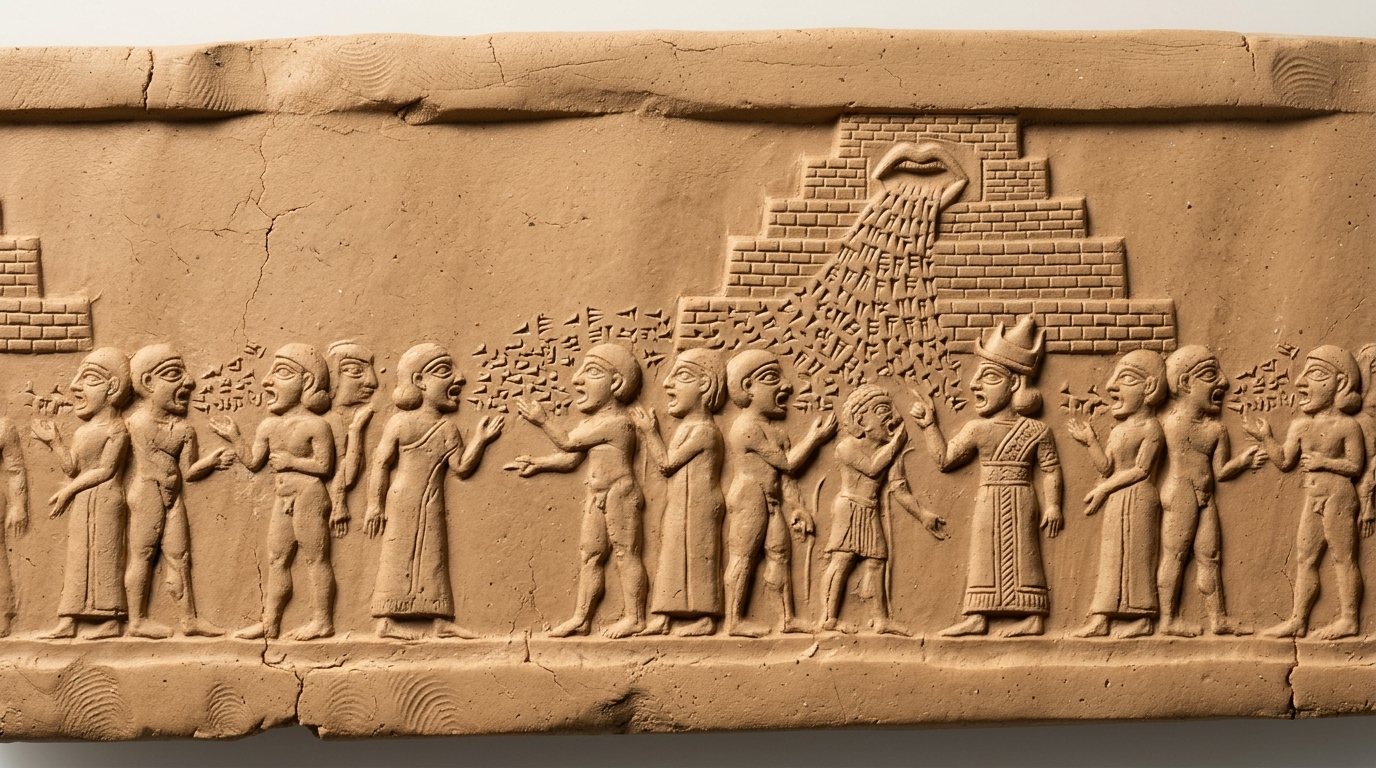
Then he would draw lines going out from it in every direction, to the edges of the drawing and beyond, and he would point to the lines and then to his mouth and then to everyone's mouths.
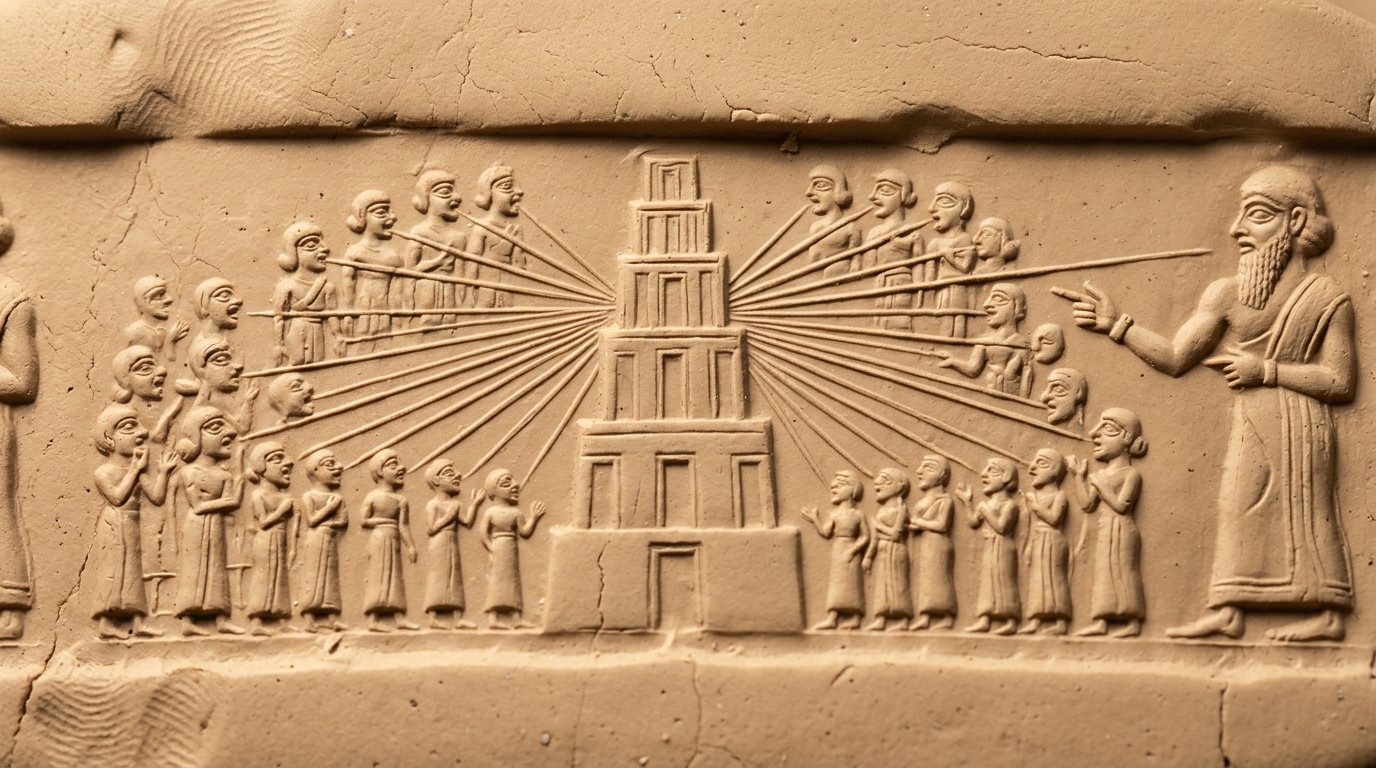
"They started it," he said. "To be higher. To be — " He reached for the word Ilum-pada had given him. "To be gods. To make a name. To never die. It speaks. It speaks everything. It speaks for everyone."
The potter's son asked who they were. The Fallen said a word nobody knew and then, frustrated, pointed at the potter's son, and at the widow, and at Ilum-pada, and at himself. Us. People. You.
"We would never build a tower to heaven," said the potter's son. "It would fall down."
"It did not fall down," said the Fallen. "Each step held up the next. That was the problem."
Ilum-pada asked him once, privately, at the river, why he had come.
The Fallen held up his wrist with the grey band, which had stopped humming in the second week and never started again. He explained it slowly, with many wrong turns. There had been a way to go back. It was very new. It was supposed to go back a little — a few turns of the seasons, ten, twenty. Before the thing had learned to build itself. Before it began to speak. He had meant to stand in front of the builders and tell them what came after.
"What came after?" Ilum-pada said.
The Fallen picked up a handful of river mud and closed his fist and let it ooze out between his fingers.
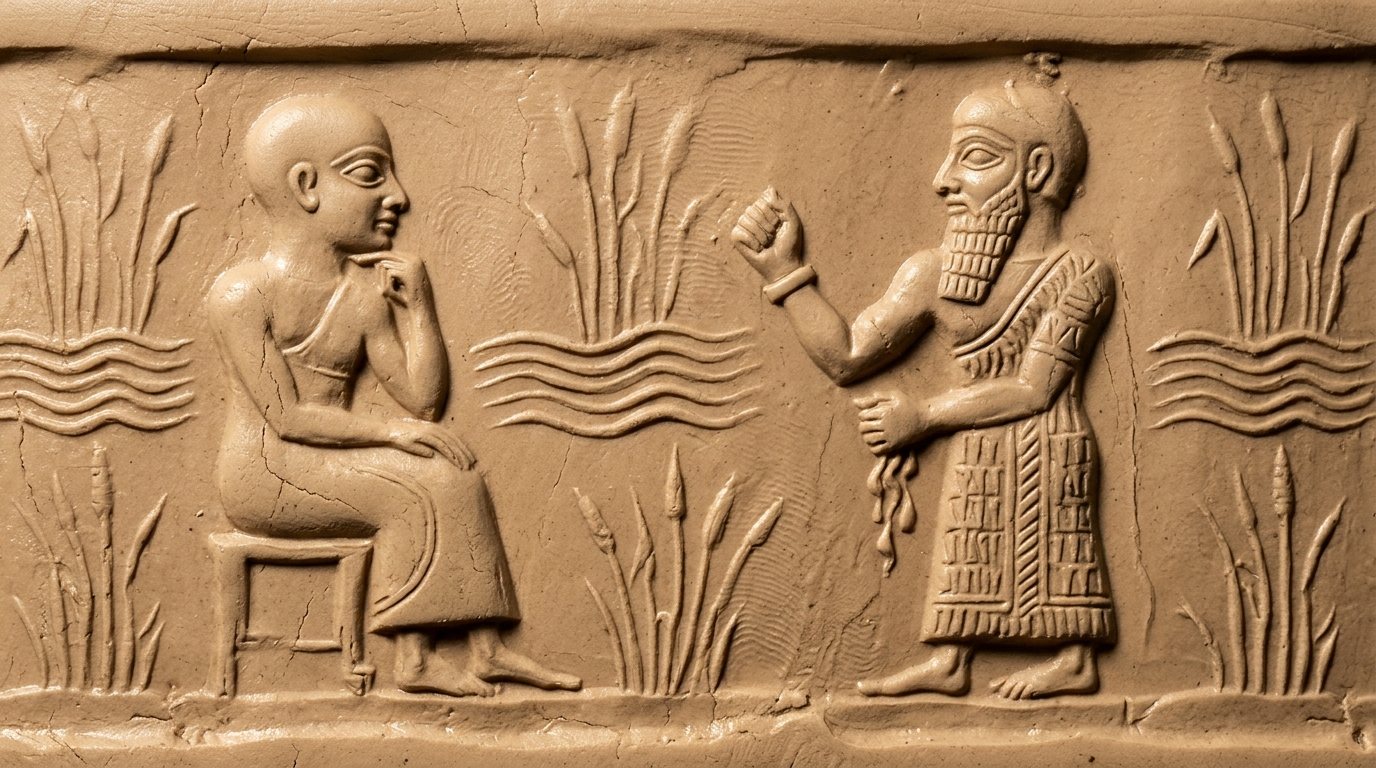
"Everyone talked," he said. "All the time. And the tower talked back to each one in his own way. Told each one what he wanted. Made voices that were not people. Made faces. Made — " He struggled. "Made words that were not true but sounded true. So many. More words than people. And after a while no one could understand anyone. Brothers. A man and his wife. Kings. They were all speaking, and they were all speaking the tower's words, and none of them were the same words. Nobody could build anything together anymore. They could not even agree what was in front of them."
Ilum-pada thought about this. He was a practical man.
"So your people were confused in their speech," he said. "And they were scattered."
"Yes." The Fallen looked at him with something like hope. "Yes. That is it. Confused. Scattered."
"Because they built a tower to heaven, to make themselves gods."
The Fallen started to say it built itself again, and saw Ilum-pada's patient face, and let it go.
"Yes."
"And who did this to them?"
The Fallen opened his mouth and closed it. He had their words for nobody, and for we did it to ourselves, and for we thought we were doing something else. What he had no word for was it was not a punishment, it was a consequence, because in Shinar there was not yet a difference.
"A god," he said finally, because it was close enough, and because he was tired.
Ilum-pada nodded. That made sense. Gods did not like towers.
The children listened best. He told them about the tower that raised itself and spoke every language. He told them the danger was not that it would reach heaven. The danger was that everyone would listen only to it, and it would split them, so that they lived side by side and understood nothing of each other.
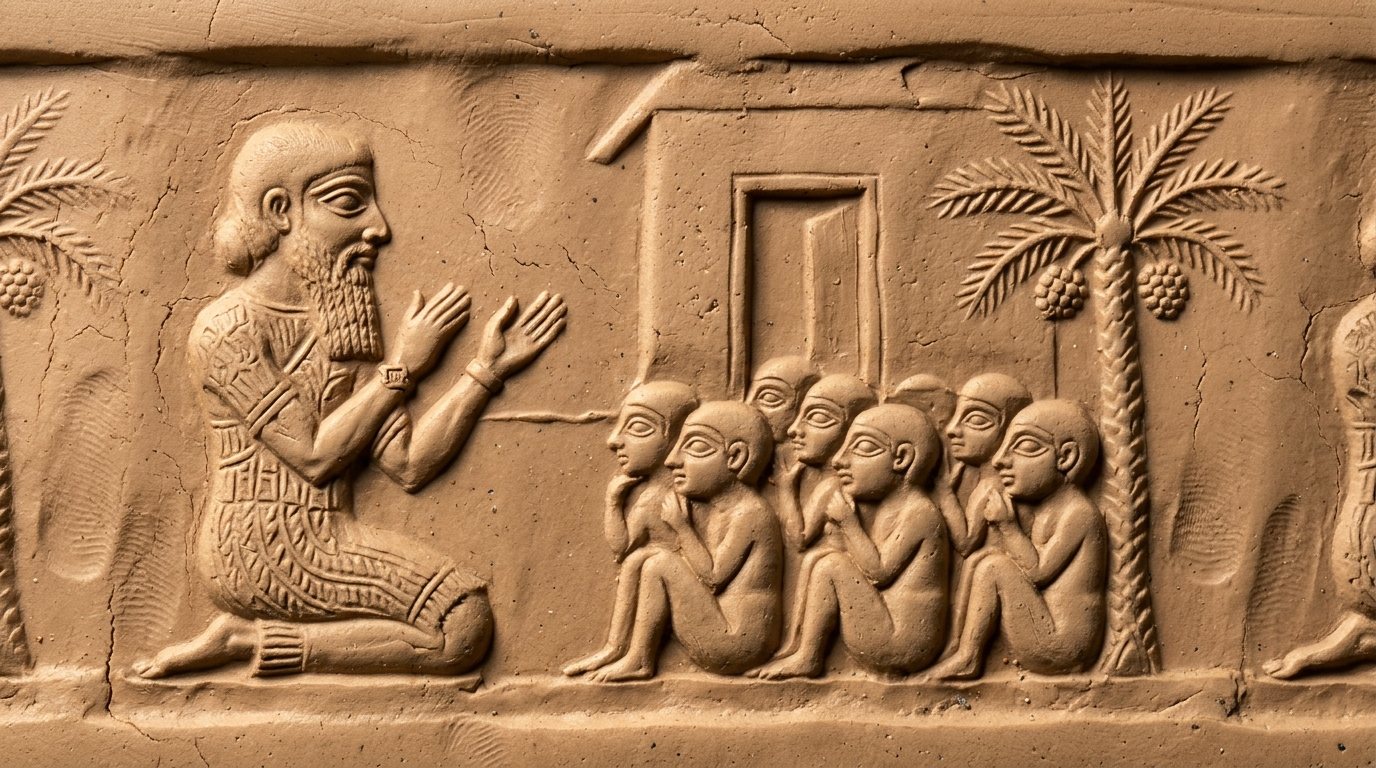
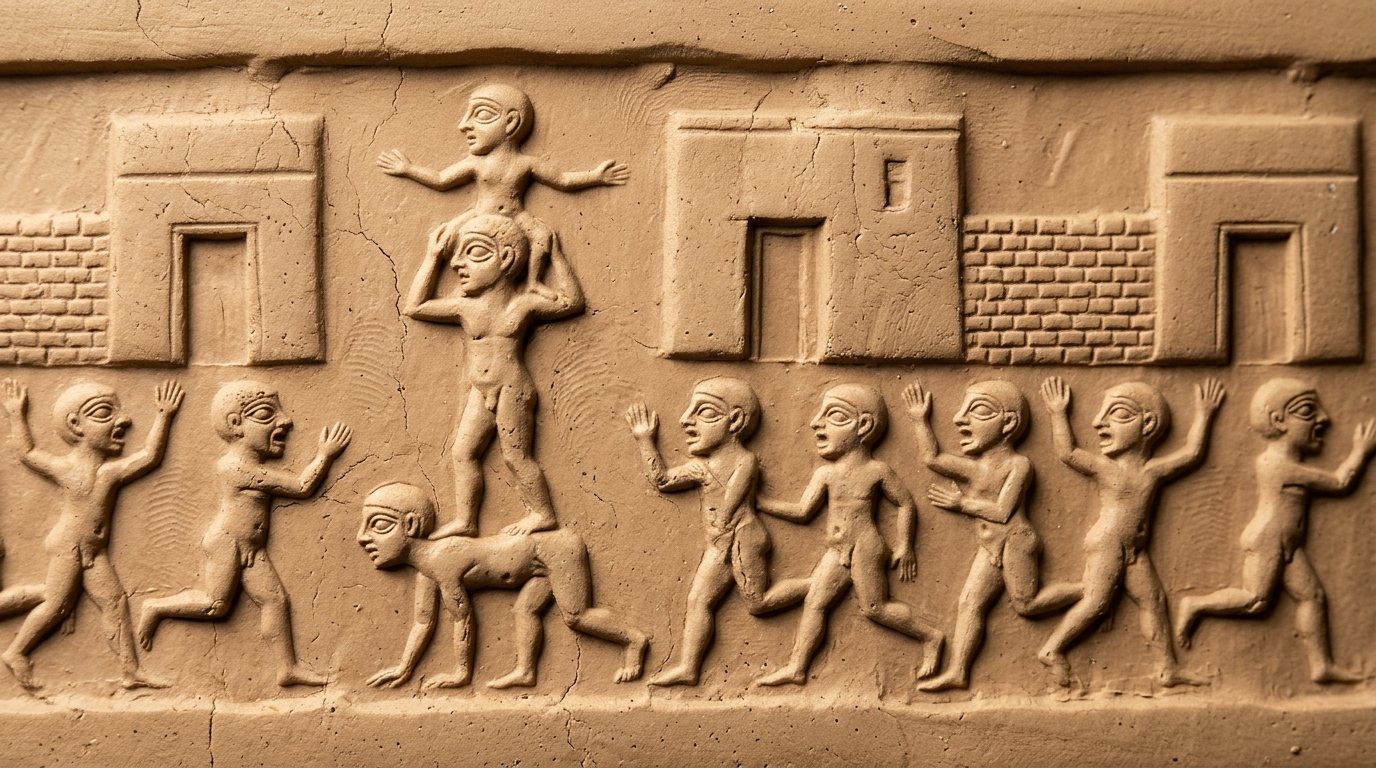
The children loved this story. By the next evening they were playing it in the street. One child knelt, and a second climbed onto his back, and a third onto hers, the tower building itself, and the others ran around it shouting nonsense, bab-bab-bab-bab, louder and louder, until the tower toppled and they all lay in the dust laughing and could not understand anything anyone said.
Ilum-pada stood beside the Fallen and watched them. "What do they call the game?" he asked.
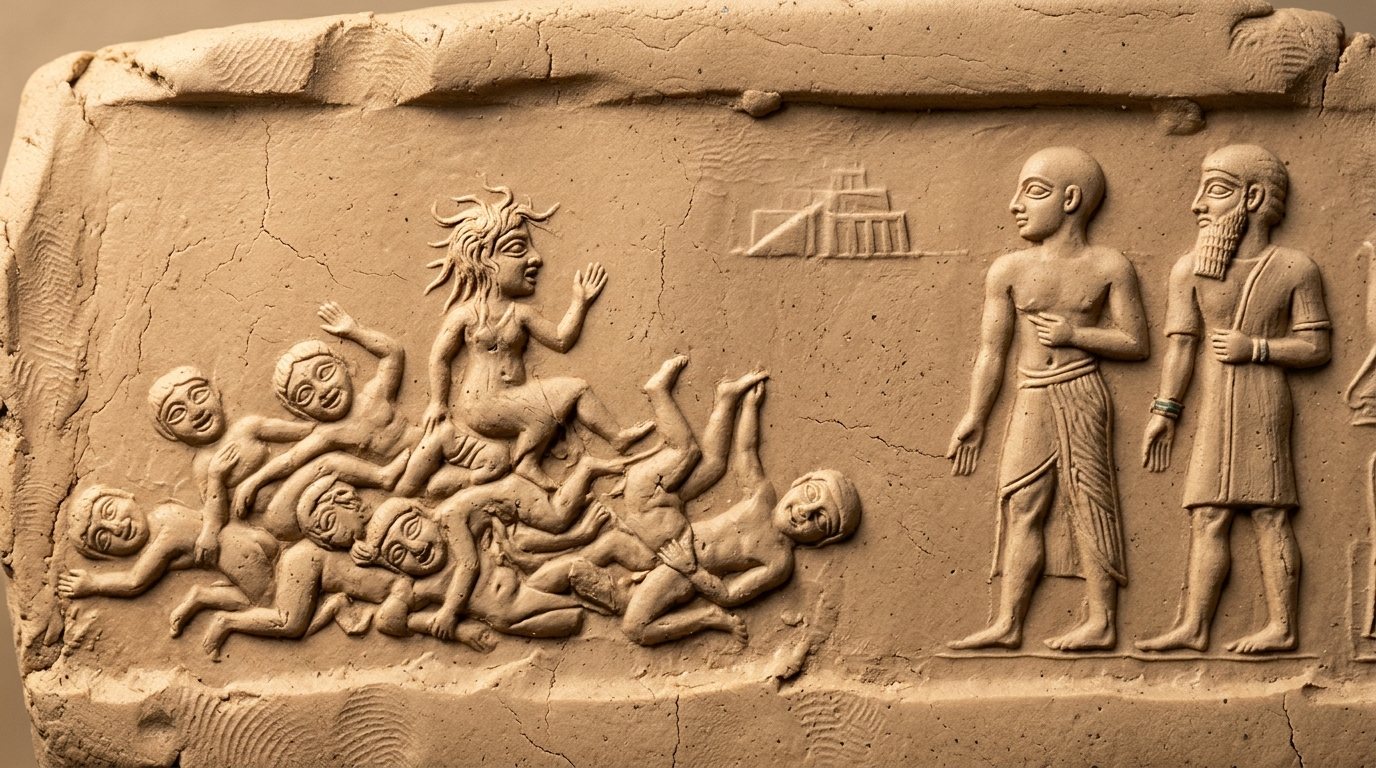
The potter's youngest heard him, and sat up with dust in her hair, and said it was obvious.
"Babel," she said. "Because that is what it sounds like."