Psychohistory Got the Math Backwards
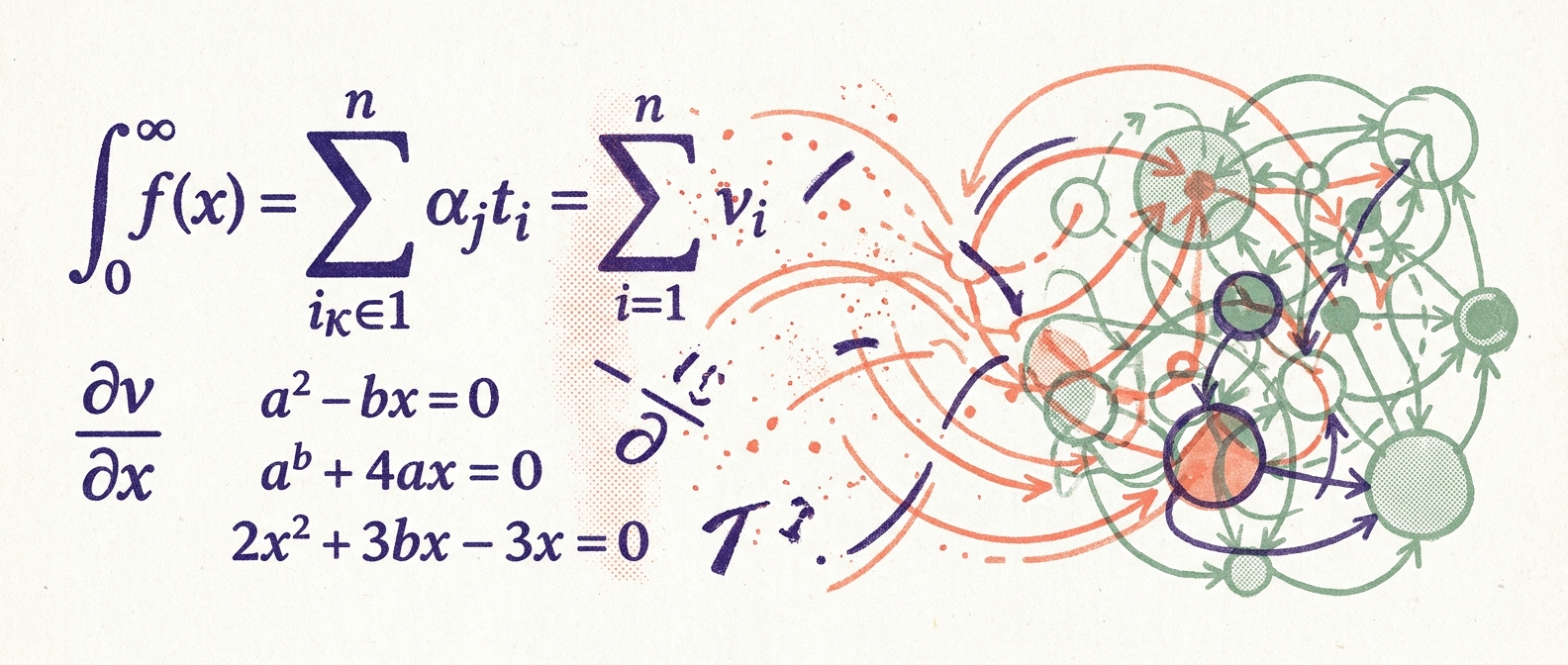
Hari Seldon — the mathematician at the center of Isaac Asimov's Foundation series and its Apple TV+ adaptation — invented psychohistory, a science that assumes sufficient aggregation makes human social dynamics predictable, statistical mechanics with sociological variables, deterministic at the level of trillions. The 2020s tipping-point literature has concluded the opposite. The math doesn't simplify with scale, it gets harder.
This isn't a new ambition. In the second epilogue of War and Peace, Tolstoy proposed that history could only be understood as the integral of what he called the differential of history — the infinitesimal tendencies and decisions of ordinary people, summed across populations. He was already skeptical, in the 1860s, that even retrospective explanation would work, let alone prediction. And Tolstoy was working in a tradition that ran back at least through Comte and Laplace, and likely further. The project of mathematizing collective dynamics is centuries old. The current iteration has contributed a specification of why the project keeps failing without producing a workable replacement.
Higher-order interactions don't decompose. A 2025 Royal Society A paper (arXiv:2509.07802) on cascade dynamics finds that group interactions — effects that can't be reduced to sums of pairwise edges — qualitatively alter cascade behavior. Attractive HOI induces cascades at coupling strengths where pairwise models predict none, and shifts the bifurcation from smooth to abrupt and hard to reverse. Repulsive HOI does the opposite. Standard cascade models, which use pairwise-only interactions, systematically mis-estimate both risk and recoverability. The mistake is exactly Seldon's: assuming sufficient aggregation washes out structure. It doesn't, because the structure lives in the higher-order terms.
Early warning signals fail when systems are rapidly forced. Classical theory says systems approaching tipping points show critical slowing down — rising variance, slower recovery from perturbations, watchable in advance. A 2025 IOP Science paper (10.1088/2632-072X/ae6217) unpacks the parameter ε, the ratio of external forcing speed to internal system timescale. Temporal EWS only work reliably when ε < 0.1 — when the forcing is at least ten times slower than the system's natural dynamics. Earth's climate, democratic norm erosion, AI capability scaling, and Korean fertility collapse compressed into one generation are all rapidly forced. We are in the exact regime where the textbook prediction tools degrade most.
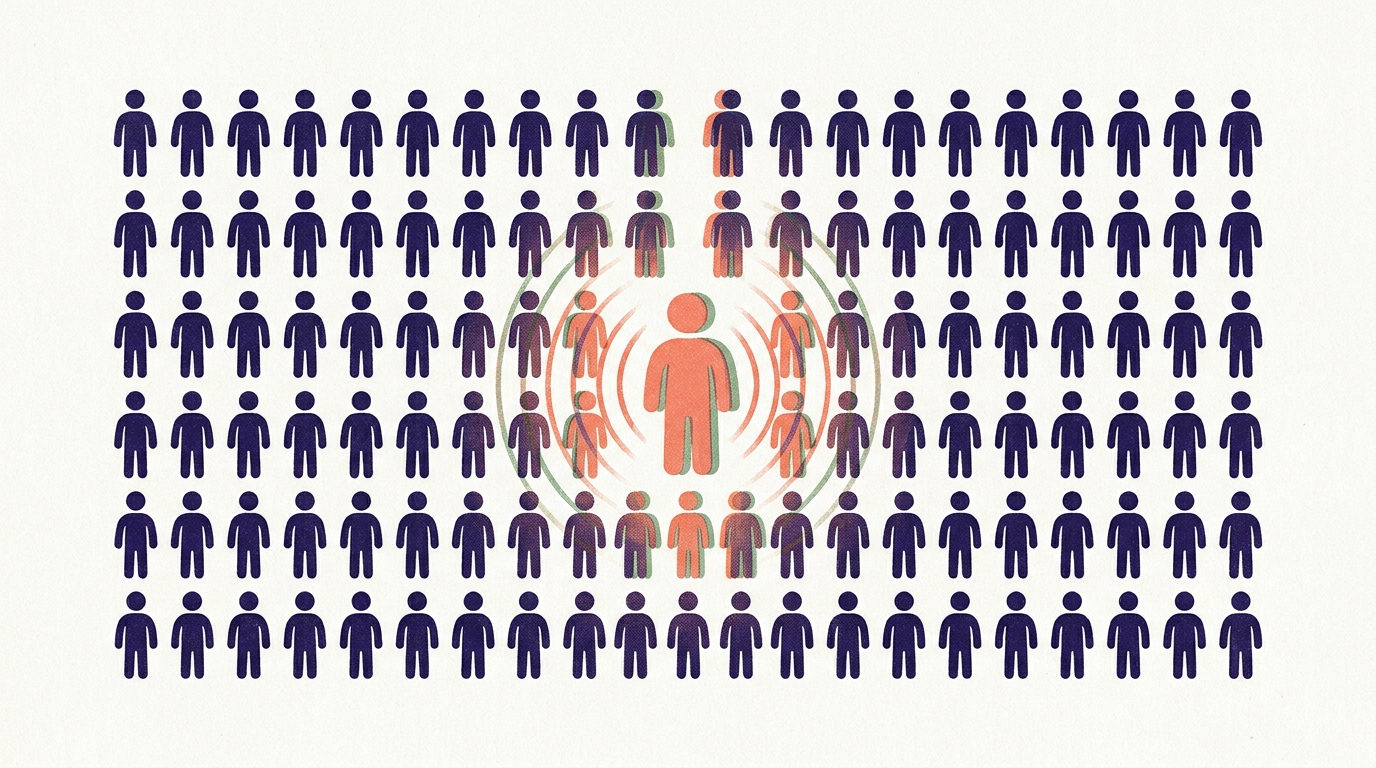
The Mule was pre-loaded. This one isn't Seldon getting the math wrong — it's the world violating the preconditions his math required. Psychohistory needed a closed stationary system; individual disruptors operating outside the training distribution were explicitly scoped out, which is why the Mule broke the original Plan in Asimov's story.
The Mule's power in the books was mental — direct emotional control over individuals, which let him conquer planets by converting their leaders rather than defeating their armies. The mechanism didn't decompose into the pairwise interactions psychohistory was tracking; he was a higher-order effect with legs.
Our century has frontier AI sitting outside every dataset used to fit any historical model of civilizational dynamics. The mechanism is different — attention, persuasion, automation rather than telepathy — but the operational structure is the same: a disruptor that acts on the individuals psychohistory was supposed to average over, with effects that don't factor into the aggregate-level math. And the differences make it worse. The Mule was singular and capability-stable; we are generating a plural, scaling, endogenous variant — multiple labs, multiple architectures, open-weight derivatives, each generation meaningfully more capable than the last, sold as product.
Asimov gave Seldon the Second Foundation: a coordinated, mathematically literate faction operating outside the predicted trajectory to correct it. Our equivalent is alignment research — mostly public, fragmented across competing commercial labs, and structurally inside the same economic engine producing the disruptor.
What survives from the long project is the Foundation premise, not psychohistory. The First Foundation worked because it was a deliberately constructed reservoir of preserved knowledge, technical capacity, and institutional memory — useful through the transition regardless of whether the math was right about the end-state. The asymmetry is that Asimov gave Seldon a Plan. The institutions in the books were derived from the math; we have to build ours on instinct rather than calculus, choosing what to preserve without knowing which transitions are coming.